
The space under your bathroom sink can quickly become one of the messiest areas in your home. Cleaning products, toiletries, spare toilet paper, and personal care items often end up piled together, making it difficult to find what you need.
The good news is that you don’t need a large bathroom or an expensive renovation to create an organized cabinet. With a few practical storage solutions and a simple system, you can transform the space under your sink into a functional storage area.
Whether you live in a small apartment, rent your home, or simply want to make better use of your bathroom cabinets, these under-sink organization ideas can help you get started.
1. Start by Emptying and Measuring the Cabinet
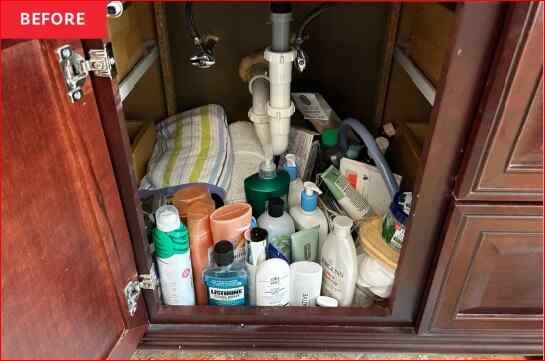
Before purchasing storage containers, take everything out from under the bathroom sink. This gives you a clear view of the available space and helps you identify items that no longer belong there.
Group similar products together, such as cleaning supplies, hair care products, skincare items, and extra toiletries. Check expiration dates where applicable and dispose of unwanted products according to their labels and local disposal guidelines.
Next, measure the cabinet’s width, depth, and height. Pay special attention to the plumbing pipes, which can limit how much usable space you have.
Measurements are important because organizers that look perfect online may not fit around the sink drain or water supply lines.
Helpful tip: Measure the usable space on both sides of the pipes. You may discover that two narrow organizers work better than one large storage bin.
2. Use Stackable Organizers to Maximize Vertical Space
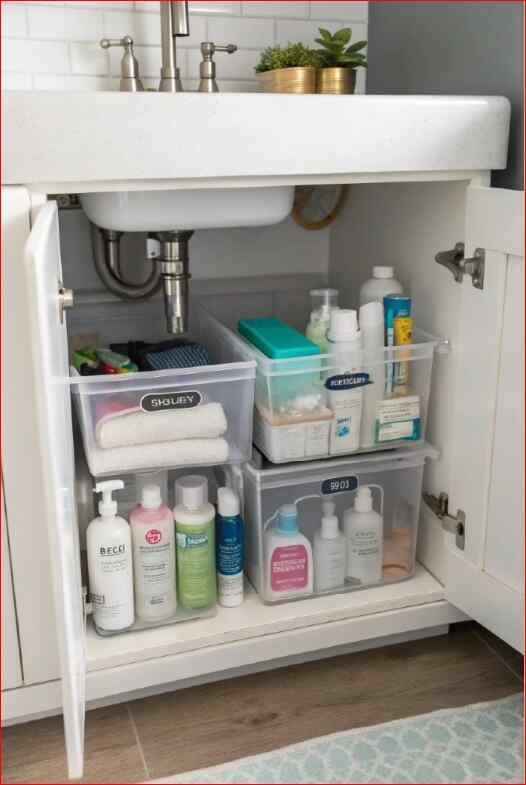
One of the most effective ways to organize under a bathroom sink is to use the vertical space inside the cabinet.
Many bathroom cabinets have unused room above the items stored on the bottom shelf. Stackable drawers, tiered organizers, and compact shelving units can help you take advantage of this height.
Look for organizers that allow you to reach frequently used products without removing everything stored above them.
For example, you could place everyday skincare products on the top level and less frequently used supplies on the bottom level.
If your cabinet has limited height because of the plumbing, consider shorter organizers that fit beneath or beside the pipes.
Avoid stacking heavy products in unstable containers. A well-organized cabinet should make items easier to reach, not create another obstacle.
3. Choose Clear Bins for Small Bathroom Essentials
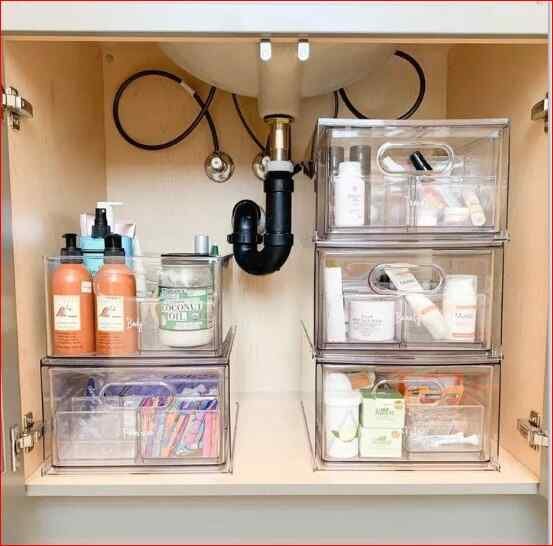
Small products are often responsible for most of the clutter under a bathroom sink. Hair ties, cotton pads, travel-size toiletries, spare toothbrushes, and other everyday essentials can easily become scattered throughout the cabinet.
Clear storage bins make it easier to see what’s inside without opening every container.
Choose a few bins in different sizes and assign each one a specific purpose.
For example:
- One bin for hair accessories and styling tools.
- One bin for skincare and personal care products.
- One bin for spare toiletries.
- One bin for bathroom cleaning supplies.
Labeling the containers can make the system even easier to maintain, especially when multiple people share the bathroom.
You don’t need matching luxury containers to achieve an organized appearance. Affordable plastic bins can work well as long as they fit the cabinet and are easy to clean.
4. Organize Around the Plumbing Pipes
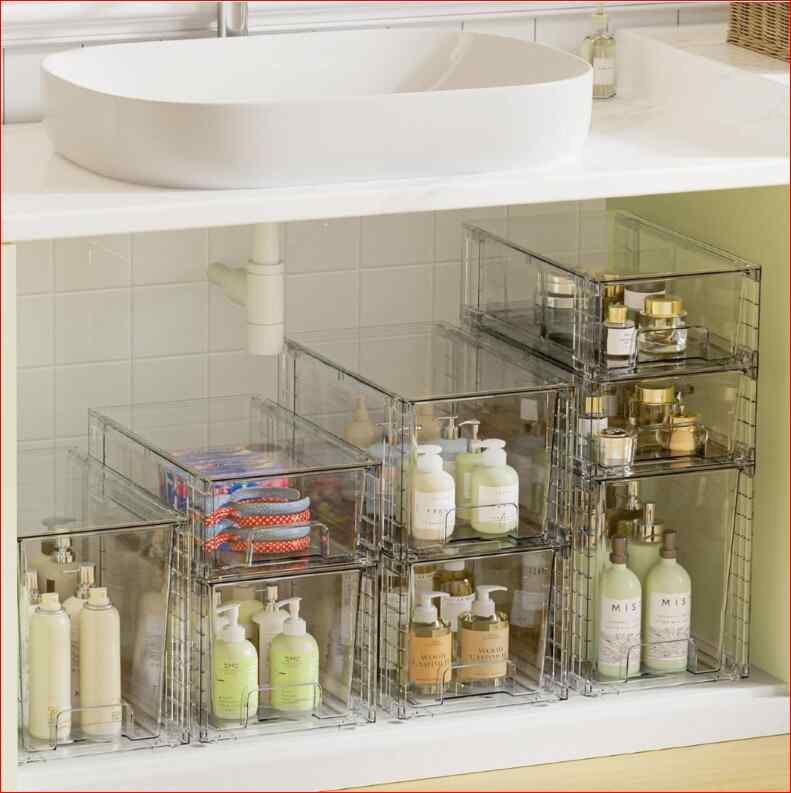
The pipes beneath a bathroom sink are often the biggest challenge when organizing a small cabinet. They divide the available space and make it difficult to use traditional rectangular organizers.
Instead of trying to fit one large container beneath the sink, divide the cabinet into smaller storage zones.
Use narrow bins on either side of the drainpipe. If the cabinet has enough clearance, a compact U-shaped organizer designed to fit around plumbing may also be useful.
Measure carefully before buying any product. Check that the organizer doesn’t press against pipes, interfere with shutoff valves, or block access to plumbing connections.
Leave enough room to inspect the pipes and reach the valves if necessary. Avoid storing items in a way that could hide a leak or make maintenance difficult.
A practical approach: Store frequently used products on the side with the easiest access and reserve tighter spaces for lightweight items you rarely need.
5. Add Pull-Out Drawers for Hard-to-Reach Items
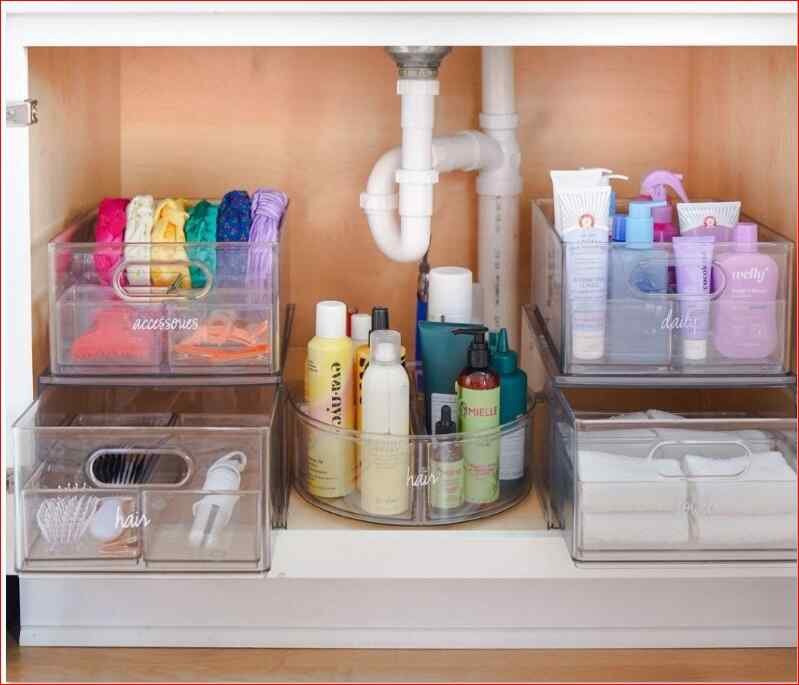
Deep bathroom cabinets can waste valuable space because products at the back are difficult to reach.
Pull-out drawers or sliding baskets help solve this problem by allowing you to bring stored items forward instead of reaching blindly into the cabinet.
These organizers are particularly useful for larger cabinets with enough width and clearance for a sliding mechanism.
Before installing one, check the cabinet’s interior dimensions and the position of the plumbing. Some pull-out systems require a flat, unobstructed surface, while others are designed specifically for under-sink storage.
For renters, freestanding organizers may be preferable because they usually don’t require drilling or permanent installation.
If you choose an adhesive or mounted organizer, follow the manufacturer’s installation instructions and consider whether it is suitable for your cabinet material.
6. Store Cleaning Supplies in a Separate Zone
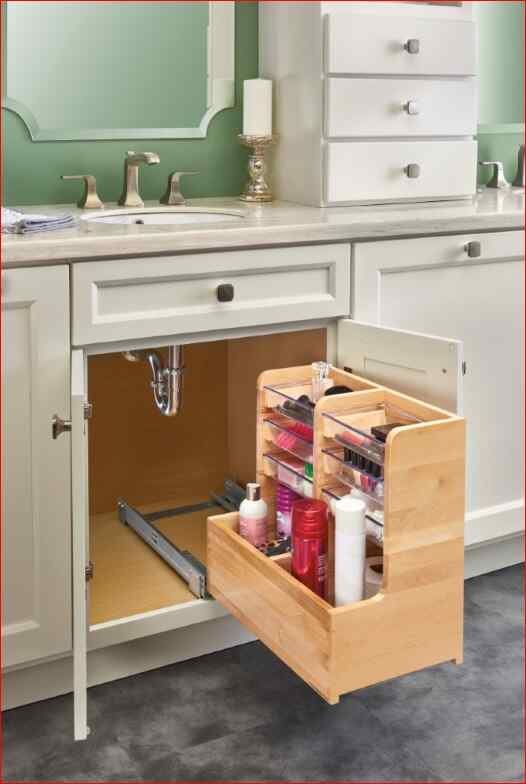
Bathroom cleaning products should have a clearly defined storage area. Keeping them together makes it easier to find the right product and reduces the chance of accidentally mixing incompatible chemicals.
Use a sturdy, easy-to-clean bin to group appropriate cleaning supplies. Keep products in their original containers with their labels intact.
Always follow the product labels for storage instructions. Keep cleaning chemicals away from children and pets, and never mix products such as bleach and ammonia.
If your bathroom cabinet is accessible to young children, use suitable child-resistant storage or a secure location that meets the products’ safety requirements.
Avoid placing cleaning products directly beneath a leaking pipe or in an area where moisture can damage their packaging.
A separate cleaning zone also helps prevent cleaning supplies from becoming mixed with personal care products.
7. Make Use of Cabinet Doors Carefully
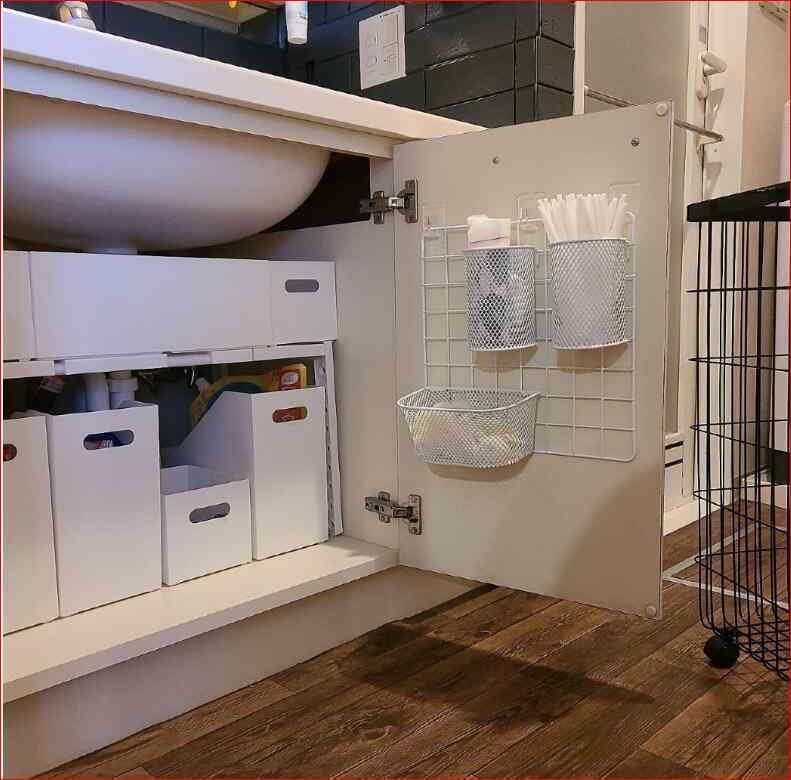
The inside of a bathroom cabinet door can provide additional storage for lightweight items.
Depending on the cabinet design, you might use a small removable organizer for hair accessories, disposable grooming items, or other compact essentials.
However, not every cabinet door is suitable for mounted storage. Before attaching anything, check the door’s thickness, the available clearance, and whether the organizer could hit the plumbing or items inside the cabinet when the door closes.
For rental properties, removable solutions may be convenient, but adhesive products can still damage some finishes. Check the manufacturer’s instructions and test compatibility in an inconspicuous area when appropriate.
Avoid attaching heavy bottles or sharp objects to cabinet doors. Keep the added storage lightweight and secure.
If door-mounted storage doesn’t fit your cabinet, small bins on the cabinet floor can provide a similar organizational benefit without requiring installation.
8. Keep Everyday Items Separate From Backups
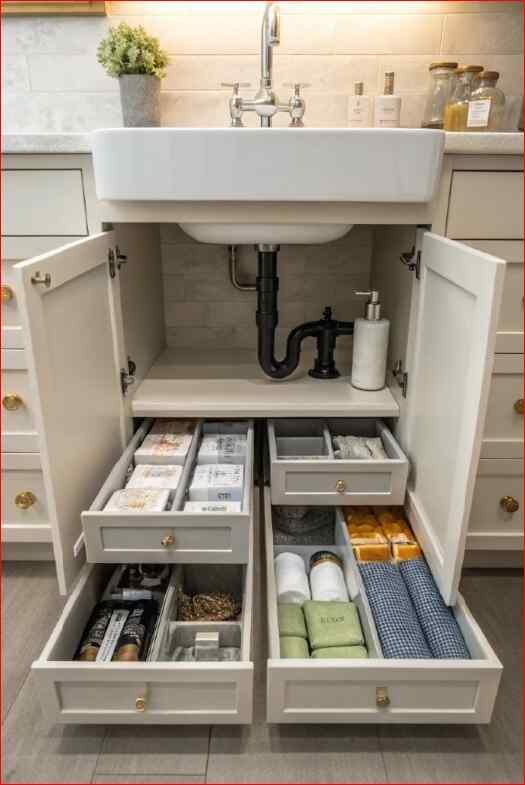
One common organization mistake is storing everyday products and extra supplies together.
When daily-use items are mixed with unopened replacements, it’s easy to lose track of what you have. You may also find yourself moving several products just to reach the one you use every morning.
Create two separate categories:
Everyday essentials: Products you use regularly, such as moisturizer, deodorant, or hair care items.
Backup supplies: Unopened toiletries, spare soap, replacement products, and other items you don’t need every day.
Keep frequently used products near the front of the cabinet. Place backup supplies farther back or in a separate bin.
This system also makes restocking easier. When you finish a product, you can check the backup container before purchasing another one.
Try not to keep excessive quantities of supplies under the sink. A smaller collection of useful products is often easier to maintain than a cabinet filled with items you rarely use.
9. Create a Simple Maintenance Routine
Even the best bathroom organization system can become cluttered if it isn’t maintained.
The easiest way to prevent the cabinet from becoming messy again is to create a routine that takes only a few minutes.
Once a week, return misplaced items to their designated containers and remove anything that doesn’t belong under the sink.
Once a month, check your supplies and discard products according to their labels and applicable disposal guidelines.
It’s also worth checking the cabinet for dampness, unusual odors, or signs of plumbing leaks. If you notice a leak, address the problem rather than simply moving the products around it.
Use washable containers where possible, and allow the cabinet to dry if moisture accumulates.
The goal isn’t to keep every item perfectly arranged at all times. It’s to make sure everything has a designated place and can be found when you need it.
Common Mistakes to Avoid When Organizing Under the Bathroom Sink
A few simple mistakes can make an organized cabinet difficult to use.
Buying Organizers Before Measuring
Storage products should fit the actual dimensions of your cabinet. Measure around pipes and other obstructions before purchasing bins, drawers, or shelves.
Filling Every Inch of Available Space
A completely packed cabinet is harder to clean and maintain. Leave room to remove containers and access plumbing connections.
Ignoring Moisture
Bathrooms are frequently exposed to humidity, and plumbing leaks can go unnoticed beneath the sink. Choose suitable containers and inspect the cabinet periodically.
Storing Too Many Products
Keeping unused toiletries, expired products, and duplicate supplies can quickly recreate the original clutter. Review what you own before adding more storage.
Using Unsafe Storage Practices
Cleaning chemicals should remain properly labeled and stored according to their instructions. Keep incompatible products separate, and prevent access by children and pets.
Frequently Asked Questions
What is the best way to organize under a small bathroom sink?
Start by measuring the cabinet and identifying the space available around the plumbing. Use narrow bins, stackable organizers, or compact drawers to separate products into categories. Keep frequently used items near the front and leave enough room to access the pipes.
How can I organize under a bathroom sink without buying expensive organizers?
Reuse suitable containers you already have, such as small plastic bins or sturdy storage boxes that can handle the environment. Clean them before use, group similar items together, and label each container if needed.
The most important part of organization is having a consistent place for each category, not purchasing expensive products.
What should I avoid storing under the bathroom sink?
Avoid storing items that can be damaged by moisture or that require a different storage environment. Follow the labels on medications, cosmetics, cleaning products, and other supplies. Keep chemicals properly labeled, away from incompatible products, and inaccessible to children and pets.
How do I organize a bathroom cabinet with pipes in the middle?
Divide the cabinet into separate zones on either side of the pipes. Narrow bins or organizers designed for under-sink cabinets can help use the available space. Measure carefully and avoid blocking valves, connections, or areas that need to remain accessible for maintenance.
Are pull-out organizers worth it for bathroom cabinets?
They can be useful when the cabinet is deep and has enough unobstructed space for the sliding mechanism. However, they aren’t necessary for every bathroom. In smaller cabinets, a few lightweight bins may provide a more affordable and flexible solution.
How often should I reorganize under the bathroom sink?
A quick weekly check can help keep everyday items in their designated places. A more thorough review once a month can help you identify empty containers, unused products, and supplies that need replacing.
Final Thoughts
Organizing under the bathroom sink doesn’t require a complete bathroom makeover. With a little planning, a few appropriately sized containers, and a practical storage system, even a small cabinet can become easier to use.
Start by measuring the space, separating products into categories, and choosing organizers that fit around the plumbing. Keep everyday essentials accessible, store cleaning products safely, and leave enough room to inspect the cabinet when necessary.
The best under-sink organization system is one that works with your bathroom, fits your budget, and is simple enough to maintain over time.
